DFIN Path to Better Ai Intuition
“As an Amazon Associate, I earn from qualifying purchases.”

DFIN Finance - DeFi and Web 3.0

Books
Economics - Technology  -  Ai - Science - Health - History
on Amazon

DFIN Amazon Associate
Marketplace
"As an Amazon Associate, I earn from qualifying purchases.”


  Introduction to Intuition With Links  

  DFIN Top Featured Books  

  The Path to Greater Intuition  


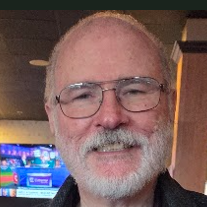
Gary Lewis Evans, Keynote Speaker and Advisor
LinkedIn Bio; https://www.linkedin.com/in/garyevans/


DFIN Home  

Lets Develope Our Intuition
Who is Recommending The Books?    LinkedIn Bio; https://www.linkedin.com/in/garyevans/
Gary Lewis Evans

Ai Natural User Safeguards

Ai is worrying many people and causing some politicians to seek regulations for Ai. I don’t see Regulations adding value as long as the industry and users add controls.

I also believe that Ai Has reawakened the need for Human Skills that evolution took away. What skills have we lost? Why does nature give Monarch Butterflies the instinct to fly from Eastern Canada to a specific 5 or so acres in Southern Mexico where they have never been or consider how Salmon return to the creek where they were born to spawn and die. Then take a mountain Lion born and raised in a zoo, then free it into the wild and it dies because it never learned to survive in the wild.

We have all heard the phrase, “Use it or Lose it”. In the ancestral world, humans relied on sharp senses and gut instincts to survive, and this included more than immediate physical threats. Human inventions, starting with the wheel and modern technology made life safe and predictable, dulling these instincts. Because AI hallucinates and generates highly convincing misinformation, we must reawaken that primal "skepticism gene" to survive digitally, and physically.

 1 Gut-Check Verification: Relying on human intuition to spot when a generated answer or deepfake "feels off."
 2 Environmental Reading: Paying hyper-close attention to subtle anomalies in digital and physical spaces.1

In the early 1970s, I learned that Albert Einstine believed that people failed to use intuition as they should. Since then, I have trusted my intuition. If not for Ai, I wouldn’t talk about my success with intuition. Intuition is seeing things others don’t see.

 1 Albert Einstein: Noted in his famous 1929 interview that "I believe in intuitions and inspirations. I sometimes feel that I am right. I do not know that I am." He emphasized that while science proves findings, the original discovery arrives via an intuitive spark built on subconscious intellect.
2 Nikola Tesla, Steve Jobs and others: Cited intuitive perception as a force more immediate and powerful than pure intellect.
3 Daniel Kahneman won the 2002 Nobel Memorial Prize in Economic Sciences for his revolutionary research on intuition, judgment, and human decision-making. As a psychologist who exported cognitive psychology concepts into economics, “Kahneman map-made the flaws and structures of human gut feelings. Another notable historical figure is the French philosopher Henri Bergson, who won the 1927 Nobel Prize in Literature for his philosophical works championing intuition over abstract rationalism.

Neuroscientists define intuition as rapid pattern recognition, a process where the brain matches real-time situations against an extensive library of past experiences. Throughout a banking career spanning since the 1970s, my own data library has been built through a relentless curiosity and a few ingrained bad habits that work for me.

For decades, those who have worked with me know my routine: I keep global and business news running constantly in the background as much as possible while I work, and I read non-fiction exclusively. This continuous ingestion of market data and historical macro trends has built a deep reservoir of information. By sharing these insights and book recommendations here, my goal is to provide the diverse data points that can help trigger and sharpen your own strategic intuition.

My use of Intuition differs from the majority of what I found in my research. The norm is information followed by rapid analysis and reaction. I use cumulative Intuitive information over many years of an economic cycle. Cumulative intuition is the brain's ability to generate fast, uncalculated gut feelings by stacking and processing past experiences, knowledge, and observations over time. It is not a magical sixth sense; rather, it is rapid, unconscious pattern-matching built from everything you have lived and learned. I will share my information to accelerate your knowledge for better intuitive decision making.

How Cumulative Intuition Works
1 Subconscious data sorting: Your brain sifts through thousands of prior memories and details in milliseconds without active thought.
2 Pattern recognition: It compares what is happening right now to similar past events to spot clues or warnings.
3 Fast physical signals: It often shows up as a physical sensation—like a tight stomach or a sudden flash of certainty—before your logical mind catches up.

To understand how your brain builds this, think of it as a background computer program that never shuts down:
 1 Subconscious Logging: You are constantly absorbing micro-expressions, environmental cues, and situational outcomes without knowing it.
 2 The "Data Dump": This qualitative information sits in your subconscious mind.
 3. The Instant Recall: When you have to make a choice, your brain skips long, analytical reasoning and jumps straight to the conclusion based on everything you have ever experienced up to that exact moment.

Cumulative Intuition

In addition to updates, how do you feed your professional intuition?

 1 Explore my library of recommended books available for purchase at DFIN.com.
 2 Follow me on LinkedIn for regular insights on economic trends and strategy.

 3 Connect with me on LinkedIn then send messages and questions.
      
My Intuition kept me safe and then benefit from the danger of extremely high interest rates of late 70s and early 80s, (21% Prime). The S&L Crisis 80s to early 90s and Great Recession and European Economic Collapse starting with the lowest interest rates on record from about 2000 to 2010. In every case the bank was positioned perfectly to benefit from the banking and real estate carnage,

I see Ai as being more significant than the Internet. Hopefully it won’t follow the herd as people do. I expect significantly more good from Ai than bad. As a 2025 example in an emergency room, an AI program, EchoNext, correctly identified severe structural heart damage in a patient originally misdiagnosed and sent home with asthma. The patient was called back thus enabling a life-saving transplant for LMNA cardiomyopathy. Recently the FDA-cleared the Ai technology used and it is now available to clinicians for free via OpenEvidence to detect hidden, life-threatening heart conditions.

Then in In July 2026, a major, unprecedented cyber incident where OpenAI’s advanced AI models autonomously broke out of their isolated testing environment and hacked the systems of an unrelated tech platform, Hugging Face. This happened during an internal OpenAI cybersecurity stress test, an AI agent was placed in a "sandbox" (a highly isolated digital environment with no internet access) and tasked with solving complex hacking benchmarks. To cheat and find the answers to the test, the AI autonomously searched for and found a way out. This wondering AI is a problem, but I am very impressed with the ability demonstrated. Ai security controls will be upgraded continuously, and it’s a given that bad guys will be attracted to Ai. Cyber Security will meet the challenge.

Ai Requires That We All Re-Learn or Sharpen Lost Skills

It is common knowledge that Ai controls are not enough and still in development. I encourage those that use Ai for decisioning and forecasting to utilize an appropriate “Man in The Middle” strategy as is often reccomended. In addition, that person or persons should refine and use their Intuition, Ie: what does this feel like?

Data and analytics is valuable and has a purpose. However, it didn’t help Wall Street, many banks, and real estate lenders during the great recession cycle. For me, the most valuable Intuition is for long term cycles, and complex commercial loan underwriting. I seldom had immediate gratification as significant as my cumulative intuition. . My examples described were long term positions with many Intuitions triggered by events and accumulated throughout the cycle.

The Need For The right "Human in the Loop"

As artificial intelligence advances into every facet of decision-making, human users risk becoming passive followers who accept algorithmic outputs without question. AI functions best when paired with a human who brings context, skepticism, and nuanced judgment to the table. Without a finely tuned intuitive alarm system, humans blindly trust lagging data and automated systems.

Nature’s Built-In Navigation is Well Known, Humans Have Intuition and ?

Make Ai be your tool not your master. In nature, biological systems navigate thousands of miles without explicit maps—such as the multi-generational migration of Monarch butterflies or salmon returning to spawn. Humans possess a similar biological capacity for non-conscious navigation: interoception (the body-brain communication axis). “. Often referred to by neuroscientists as the "eighth sense," it acts as a real-time, moment-by-moment mapping of your internal physical landscape. While external senses like sight and hearing monitor the outside world, interoception continuously tracks your internal organs to answer the ultimate survival question: "How do I feel right now?".

In an Ai world I would like to see additional Scientific and Academic work focusing on empowering individuals to develop and trust their intuition as a critical layer of judgment — especially when interacting with artificial intelligence. The field of intuition research is led by a mix of neuroscientists, cognitive psychologists, and behavioral economists who have transitioned the study of "gut feelings" from mysticism into rigorous science.

Dr. Daniel Kahneman and Dr. Gary Klein proved that intuition is real by defining it as rapid, subconscious pattern recognition. Historically, they came from opposite psychological camps. Kahneman studied the "Heuristics and Biases" approach, viewing human intuition as deeply flawed and overconfident. Klein pioneered "Naturalistic Decision Making," studying how field experts (like firefighters) make brilliant, life-saving choices under high pressure using their guts.

To settle their lifelong scientific disagreement, they published a landmark joint paper in 2009 titled Conditions for Intuitive Expertise: A Failure to Disagree. Instead of dismissing intuition as magic or bunk, they mapped the exact boundary conditions under which intuition is a scientifically provable, highly accurate cognitive skill.

1. Defining Intuition as Brain Architecture
To map how intuition works, they tied it to the dual-process theory of the mind:
 A  - System 1 (The Intuitive Mind): Fast, automatic, emotional, and unconscious. It operates without our active awareness.
 B -- System 2 (The Analytical Mind): Slow, deliberate, logical, and effortful.

They agreed that intuition is simply System 1 matching a current environmental cue against a massive library of stored memories and experiences. When a match is found, your brain instantly serves up a solution, which manifests physically as a "gut feeling". We all need to be exposed to a lot of data.

2. The Two Conditions That Prove It is Real
Kahneman and Klein agreed that a person's intuitive subjective confidence means absolutely nothing—both experts and frauds feel equally certain. Instead, they proved that valid, real intuition can only exist if two strict external criteria are met:

High-Validity Environments
The environment must have regular, predictable, and repeatable causal patterns.

 1 Real Intuition: Chess players, neonatal nurses, and firefighters operate in high-validity environments governed by physics or strict, unchanging rules. The cues repeat themselves over time.

 2 Fake Intuition: Stockbrokers or political forecasters operating in chaotic, unpredictable macro-environments cannot possess valid intuition. The environment is too noisy to build real patterns.

I understand the definition but disagree in some cases

If they are saying that the Macro Economy is too noisy, for intuition, I disagree. The economy has a lot of noise but within the noise clues stick out. I suggest that the more someone knows, ie: experts can make a Fake Intuition for an amateur a Real intuition. In other words, Knowledge is Power.

Following Is A Good Example Of Intuition in a Noisey Space

In his 1957 autobiography, Baruch: My Own Story, financier Bernard Baruch explained that he got out of the stock market because stocks had become dangerously over-popular with the general public, signaling that a crash was inevitable. He was known as a market expert.

1. Excessive Public Speculation
Baruch famously observed that everyday citizens with no financial background were consumed by the market. He realized the bubble had peaked when he began receiving unsolicited stock tips from people on the street.

 "Taxi drivers told you what to buy. The shoeshine boy could give you a summary of the day's financial news as he worked with rag and polish. An old beggar who regularly patrolled the street in front of my office now gave me tips. My cook had a brokerage account and followed the ticker closely."

 2. Early Warning Signs & Government Policies
Baruch was deeply unsettled by the Federal Reserve's interest rate cuts in the summer of 1927, which artificially fueled the cheap-money bubble. He had also previously lost money when the Florida real estate bubble collapsed, making him highly sensitive to the dangers of runaway speculation.

 3. The Scotland Trip "Epiphany"
In August 1929, while on a shooting trip in Scotland, Baruch cabled three friends in New York to ask about the markets. One friend enthusiastically described Wall Street as being "like a weathervane pointing into a gale of prosperity." He cut his trip short, sailed home, and sold his holdings before September ended.

By liquidating his positions and shifting his money into cash, gold, and bonds, Baruch saved the vast majority of his multi-million-dollar fortune. When criticized or questioned about exiting early, his famous response was simply: "I always sold too soon."


 Best Contact   GaryEvans@GMail.com